ZHEGUANG / APPROACH
From evidence to systems, not from style.
Design is not a string of pretty concept images. We look at real situations and limits first, then judge, prototype and test; what we hand over are rules the team can keep using.
Five points that decide the quality of the design
- 1
01 · Understand the situation
Review the existing brand, content and usage data; interview key people and record real constraints. Delivered: a list of problems and the project’s boundaries.
- 2
02 · Agree a direction
Condense the findings into design propositions you can discuss, with the trade-offs and risks of each. Delivered: direction notes and priorities.
- 3
03 · Build the grammar
Prototype type, colour, grid, imagery and motion on a small scale and test them on real content. Delivered: identity rules and samples.
- 4
04 · Test across media
Put the system into pages, print, space and small screens, find where it breaks and fix it. Delivered: tested application templates.
- 5
05 · Hand it over
Organise components, templates, production specs and the decision record, and rehearse using them with the client team. Delivered: a maintainable system, not a one-off rendering.
From method to work
A case study is not a collection of result images. Open a project to see the background, the design decisions and the system at work in different settings.
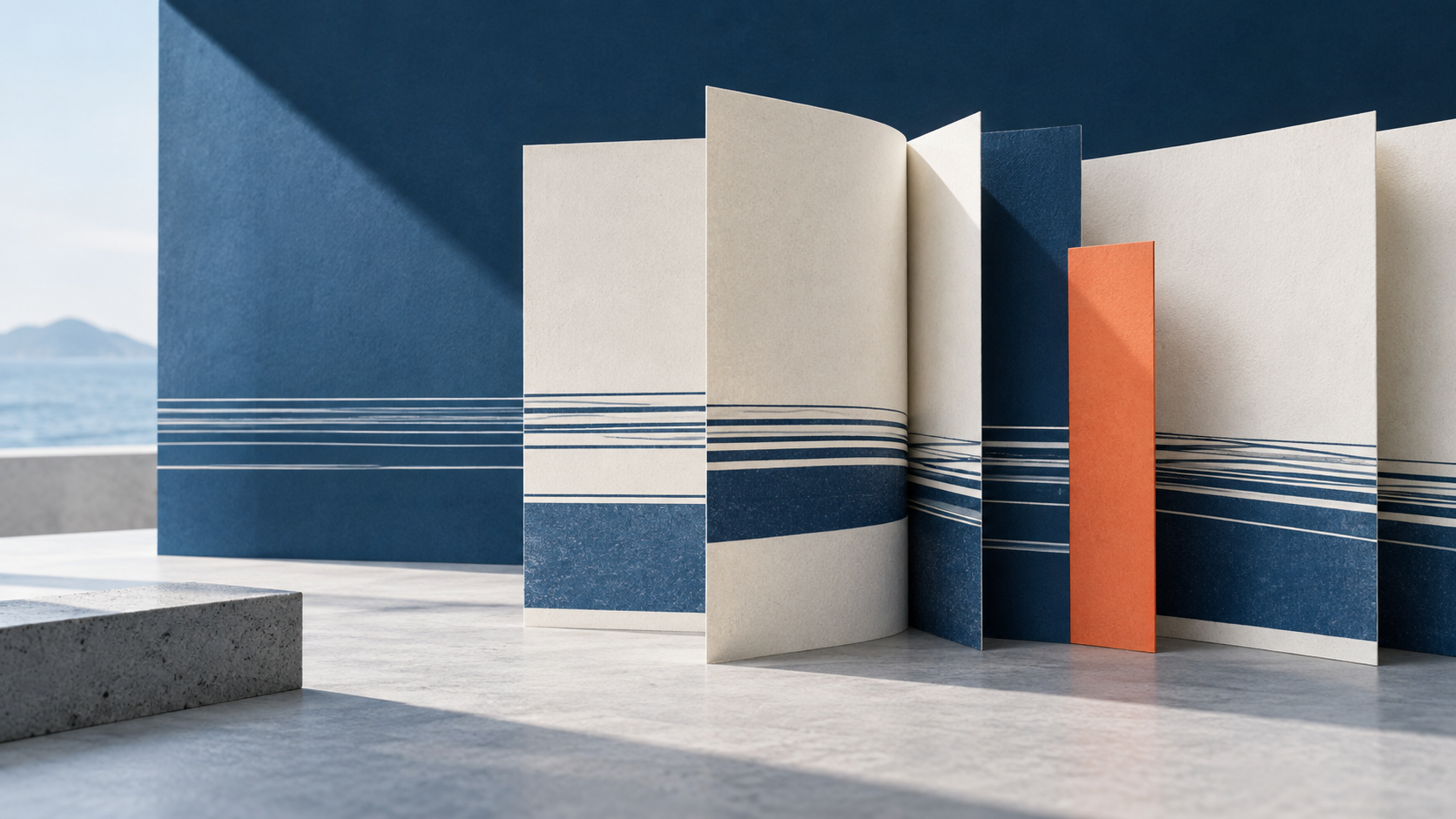
Tidal Library: A Public Culture Identity That Changes with Time
A dynamic identity connects the logo, colors, and event posters of a seaside community library.
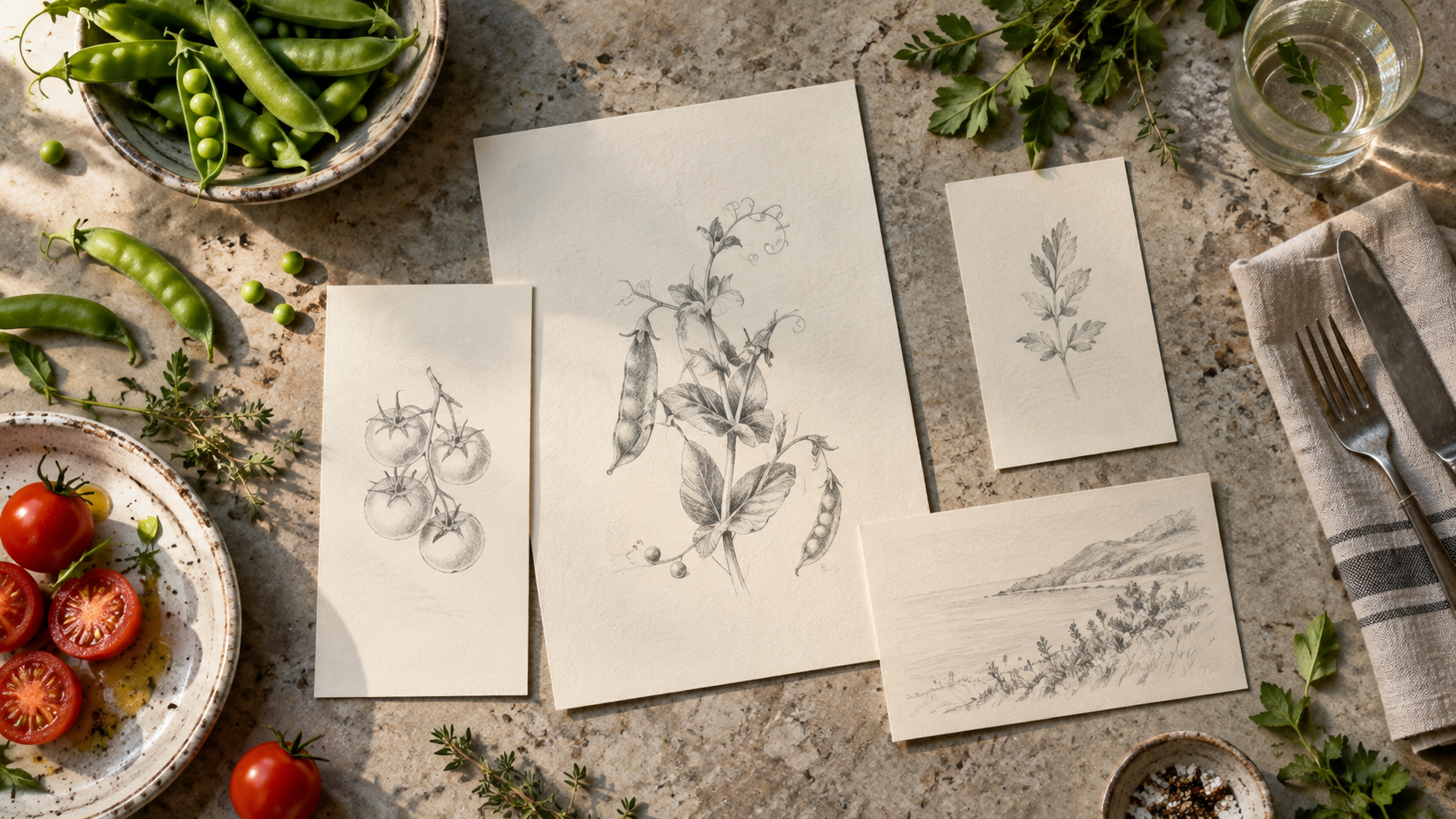
Shore Table: A Brand Language Grown from Seasonal Menus
Ingredient sources and handwritten purchasing notes form a simple, adaptable brand system for a small seasonal restaurant.
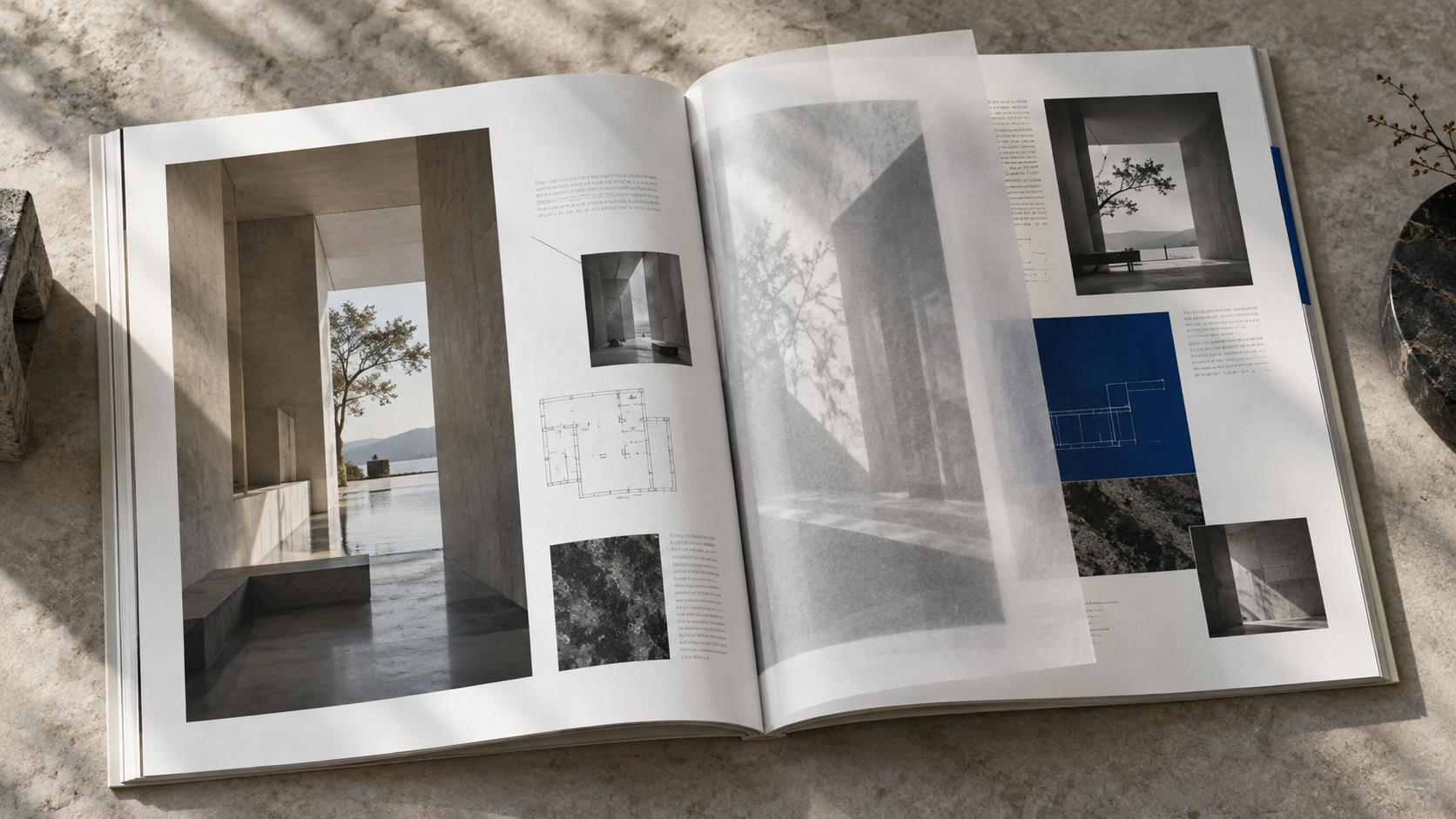
Between Spaces: An Independent Journal About Domestic Boundaries
Variable margins, translucent inserts, and a restrained image rhythm turn boundaries into a readable editorial structure.