Editorial Design
Why a Project Presentation Needs More Than Finished Images
A portfolio builds trust through the connection between problems, choices, process, and the final system.
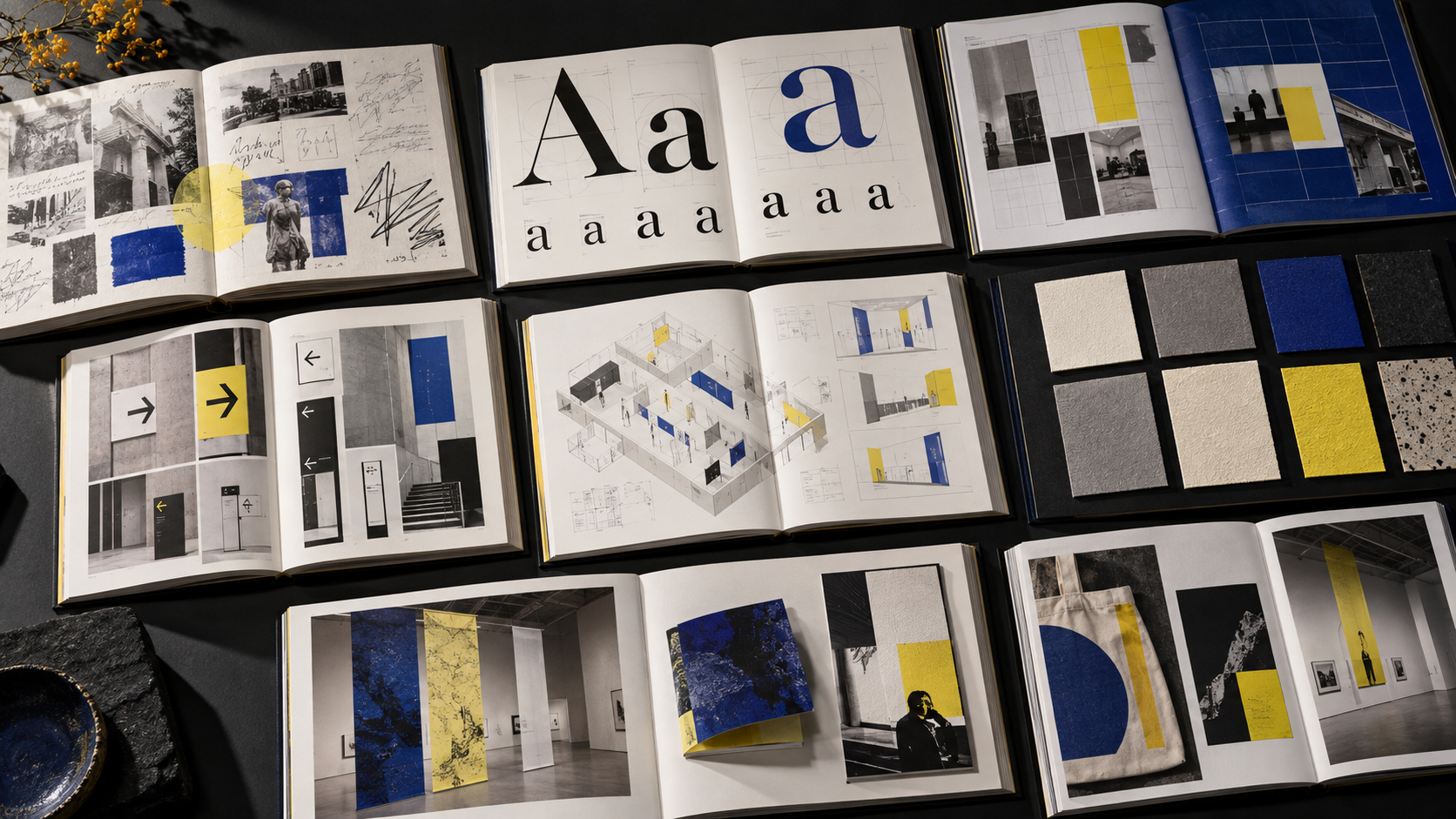
Attractive images answer only some questions
Finished images attract attention quickly. They say little about constraints, reasons behind choices, or whether a system can handle real content. Prospective clients also need to understand how the collaboration works.
Five parts of a complete case study
Begin with the change the project needed to achieve. Show the original setting and constraints. Explain how key insights became design rules. Demonstrate the system across several touchpoints. Finally, describe its remaining limits honestly.
Select process evidence that changed direction, revealed a conflict, or explains the final design.
The rhythm of images and text
Strong images work on a home page, while case study text carries the reasoning. A sequence of full width result, narrow explanation, paired details, and system overview lets readers alternate between looking and understanding.
Use verifiable outcomes
Where data is unavailable, show implementation scope, team feedback, and later iterations, or clearly label a concept project.
A good case study lets people see how design engages with real conditions.